



The next blessing in the Beatitudes delivered by Jesus from upon the mountain in the Gospel of Matthew, is possibly the most ominous of all. This is because, from the Septuagint’s perspective, it blesses no one. It is a blessing that is deliberately set out of the reach of human beings.
μακάριοι οἱ ἐλεήμονες ὅτι αὐτοὶ ἐλεηθήσονται
Blessed are the merciful, for they shall obtain mercy. (Matt 5:7)
It looks innocuous to our deadened modern eyes. It glides across our ears like the oil it etymologically evokes. But it is in fact the oil on the blade of a knife. Because as far as the Hebrew Scriptures are concerned, the category of ἐλεήμονες is very nearly a mathematical null set… but not quite. The only One in it is not a human being. Do you doubt me? Go back to the Greek text and see for yourself. Where are human beings described as ἐλεήμονες?
Not in the Book of Exodus, certainly. The human being will take his own neighbour’s coat from him as collateral on a loan (Exo 22:26); it is only God Who, being the only ἐλεήμων ‘compassionate’ one, will hear his cries if he goes to sleep cold (Exo 22:27). And not in the Book of the prophet Nehemiah, who reminds the reader that the sons of Jacob in the desert grumbled against God and against His Law and tried to go back to Egypt, yet God forbore from destroying them because—not they!—but He was merciful to them (Neh 9:17, 31). And not in the closing of the scroll, in the Book of Second Paralipomenon, either. And spare me the ‘historian’ takes about ‘reformist’ kings. From Scripture’s viewpoint, there were no ‘good’ kings in Israel or in Judah. See what Jeremiah says about them both?
וארא כּי על־כּל־אדות אשׁר נאפה משׁבה ישׂראל שׁלּחתּיה ואתּן את־ספר כּריתתיה אליה ולא יראה בּגדה יהוּדה אחותהּ ותּלך ותּזן גּם־היא׃
והיה מקּל זנוּתהּ ותּחנף את־הארץ ותּנאף את־האבן ואת־העץ׃
וגם־בּכל־זאת לא־שׁבה אלי בּגודה אחותהּ יהוּדה בּכל־לבּהּ כּי אם־בּשׁקר נאם־יהוה׃καὶ εἶδον διότι περὶ πάντων ὧν κατελήμφθη ἐν οἷς ἐμοιχᾶτο ἡ κατοικία τοῦ Ισραηλ καὶ ἐξαπέστειλα αὐτὴν καὶ ἔδωκα αὐτῇ βιβλίον ἀποστασίου εἰς τὰς χεῖρας αὐτῆς καὶ οὐκ ἐφοβήθη ἡ ἀσύνθετος Ιουδα καὶ ἐπορεύθη καὶ ἐπόρνευσεν καὶ αὐτή καὶ ἐγένετο εἰς οὐθὲν ἡ πορνεία αὐτῆς καὶ ἐμοίχευσεν τὸ ξύλον καὶ τὸν λίθον καὶ ἐν πᾶσιν τούτοις οὐκ ἐπεστράφη πρός με ἡ ἀσύνθετος Ιουδα ἐξ ὅλης τῆς καρδίας αὐτῆς ἀλλ᾽ ἐπὶ ψεύδει
And I saw that (for all the sins of which she was convicted, wherein the house of Israel committed adultery, and I put her away, and gave into her hands a bill of divorcement,) yet faithless Judah feared not, but went and herself also committed fornication. And her fornication was nothing accounted of; and she committed adultery with wood and stone. And for all these things faithless Judah turned not to me with all her heart, but falsely. (Jer 3:8-10)
And note that Jeremiah says these things during the reign of King Josiah, so beloved as a ‘reformer’ by the ‘Biblical’ historians! Both lines of kings were nothing but harlots. Only God is ἐλεήμων ‘merciful’ (Jer 3:12). The prophet Joel says the same thing, but specifically about Judah (Joel 2:13). And of course, when a prophet is sent to a non-Hebrew land, he complains about God being merciful (Jon 4:2)!
‘But wait, Tom!’ I can already hear the objection a mile off. ‘What about Proverbs? Don’t the Proverbs speak about the “merciful man”?’ Yes, but they don’t speak of him in the way that you think. Wikipedia draws a futile distinction between the ‘positive’ Semitic wisdom literature of the Proverbs and the ‘negative’ wisdom literature of Ecclesiastes, as though they were not part of the same literary corpus. It’s what all of the advocates of reception history and other such German fantasies say. Of course, they are mistaken.
First, note that every single instance of ἐλεήμων in the Psalms (85:15, 102:8, 110:4, 111:4, 114:5, 144:8), without exception, refers only to God. In light of this data, then we may begin to look at the Proverbs. Look at the structure of the Greek in Proverb 11:17. The direct object which takes the dative case is τῇ ψυχῇ αὐτοῦ: that is to say, when a man does ‘good works’, he is being ‘merciful’ to his own nafsuh نفسه ‘throat, maw’… and not to anyone else!
Likewise, the ‘merciful man’ of Proverb 19:11 is one who is able to deny his own θυμός ‘chest, spirit, honour, the part of a man which takes offence’ – this is the Greek way of glossing ’af אף ‘(flaring) nostrils, anger, wrath’. He is μακροθυμεῖ ‘long-suffering, slow to anger, thick-skinned’ (literally, he ‘has a large chest’, but in the sense that it takes a lot to get his ‘spirit’ riled up). Again, his ‘mercy’ is to himself; he does not allow what others say and do to affect his θυμός.

I would argue that the ἐλεήμων of Proverbs 28:22 refers to God: indeed, the original Hebrew does not cite any human avenger against the ‘man with the evil eye’, but only ḥeser חסר ‘dearth, poverty’. And Proverbs 20:6 in fact makes my point for me! The ἀνὴρ ἐλεήμων ‘merciful man’ is cited as someone sought-after and desired, but hard to find! This is the exact same rhetorical move that Cooper identifies at the end of the Chinese Book of Documents. Ying Renhao voices a desire for one loyal and competent minister, before he complains about the practical impossibility of finding loyalty and competence together in one person[1].
At this point, we moderns need to step back and take stock of the linguistic context. In classical Greek, being ἐλεήμων was not within the reach of all human beings to begin with. This was a term reserved for those in positions of authority, power or control over others. In Homer’s Odyssey, the nymph Kalypsō uses this term ἐλεήμων for herself, in describing her willingness to let Odysseus, whom she had been holding as a hostage, leave her island (Odyssey 5.191). In Kata Meidiou, the politician Demosthenes calls himself ἐλεήμων ‘merciful’ in his dealings with the Athenians whom he governs, and has been accordingly recompensed with good; this he contrasts to the ‘brutality’ of Meidias which should be recompensed with punishment (Against Meidias 101). Aristotle cites ‘mercy’ as a comparative quality of the female mammal towards her own young (who are in her care), with human beings as one example (Historia Animalium 9.1.8)[2].
So when Jesus talks about the ἐλεήμονες ‘merciful’, we should be wise to the fact that He is not addressing everyone present, but specifically those who seek after, acquire and hold power over their fellow human beings. Only the powerful can be ἐλεήμονες in the first place. Yet it is precisely such persons whom the Septuagint demotes from holding any such quality. Jesus’s blessing on the ‘merciful’ is in fact a burning critique on the powerful. He is holding them as (in what must be one of my Yiddish grandmother’s sayings passed down to me from my father) kadokhes קדחת ‘worthless, good-for-nothing, in for big trouble’. I use the term ‘burning’ consciously: the word kadokhes, from the Hebrew qadaḥ קדח ‘to be inflamed, to kindle, fever’, seems to be a reference to that ‘feverish heat’ in your ears and that tightness in your throat when you know you’ve been caught doing something you shouldn’t, and you know you’re in for punishment.

The news this week has been all about Ed Sheeran, Pink and Macklemore. But I’d like to call attention to something Glenn Greenwald pointed out[3] as an ancillary branch of that story. How Sheeran sacked his friend Macklemore from his tour, and how he then defended himself with deflecting language and less-than-sincere ‘apologies’, was indefensible and cowardly. Yet for a politician like Alexandria Ocasio-Cortez to make a big show of boycotting Sheeran[4] is even more shameless and cowardly. She, unlike Sheeran, is in a position to actually do something about the ongoing genocide in Gaza and the slow-roll settler violence in the West Bank, and yet she chooses not to. She chooses to give her political endorsement to genocide enthusiast[5] Hakeem Jeffries[6].
It’s the same thing with the mayor of New York, Zohran Mamdani. He’ll talk a good game about sympathy with Palestinians, and he’ll happily trot out his South Asian heritage and Arab wife and Muslim-lite identity[7], but he still lets Benjamin Netanyahu walk around freely in the city where he is the mayor[8], and he still sends in the NYPD to arrest the pro-Palestinian protesters he once supported, leaving the pro-Israeli protesters untouched[9]. And it’s the same story with Michigan Senate hopeful Abdul El-Sayed. He’s happy to use his Arab heritage and vague expressions of sympathy for Palestine instrumentally, to gain votes in Dearborn[10], but he’ll also happily take the endorsement of genocide enabler Kamala Harris and go stumping on the election trail right beside her[11].
All of the above isn’t to single out Democratic or Muslim politicians, by the way. I have no ‘beef’ with Muslims per se. I also happen to agree with the economic ideas of most of these socially-minded Democrats. And Republican politicians are equally, if not more, disgusting in their flagrant hypocrisy and harlotry. The most egregious specimens of this are the so-called ‘pro-life’ Republicans, such as Rep. Steve Scalise of Louisiana. Scalise regularly waxes maudlin over the sanctity of the lives of the unborn[12]. (That’s also a priority I happen to share, by the way.) And yet his consistent ideological opposition to debt relief for young people[13], federal paid parental leave[14] and state-subsidised health insurance for children[15] all seem oriented to the effect of making it harder for young parents, in the present economy, to afford to keep their kids! In addition, of course, there is the fact that Scalise is and always has been a die-hard supporter of the state of Israel in its systematic butchery of Palestinian children, both unborn and born[16].

The point is that all of them, every last one, are kadokhes. All of them perform mercy. None of them actually deliver it. It’s functional to the system in which they operate. The point isn’t even necessarily that Mamdani is a ‘bad person’ for running for New York mayor and then behaving like a typical New York mayor when he takes office. It’s that being mayor places him in the position of sacrificing a commitment to truth for a particular vision of the ‘greater good’ within the geographical expression of the Five Boroughs. The bargain he strikes in so doing is necessarily a Faustian one.
This harsh, unforgiving edge of the ‘blessing’ of Matthew 5:7, holding out unobtainable mercy to the non-existent merciful, is meant to illuminate this very hard truth. Even the concept of ἔλεος ‘mercy’ is outside the scope of human action. In order to show mercy, one must first be in a position of mastery over a fellow human-being: a position of power, of superiority, of the right to grant or withhold. That posture itself precludes the very possibility of mercy. The human master cannot be merciful, because human mastery itself is the problem.
Even at their most ‘positive’ (a typically-German distinction which I still heartily dispute), the Proverbs tell us that a man may have ἔλεος (Heb. ḥesed חסד ‘kindness’, which is fittingly also ‘shame, reproach’) at most upon his own nafs نفس ‘throat’, through deliberate acts of self-renunciation. The only way that ‘mercy’ may be given to others in truth, rather than just for show, is if it is given by a rūḥ روح ‘breath’ without a nafs.
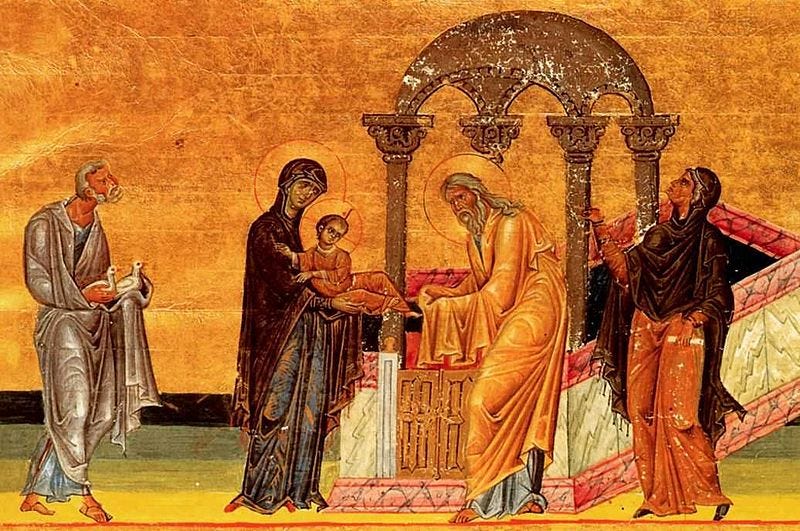
We Orthodox Christians have a very apt and wise saying, to which we give voice most prominently at the kontakion of the Feast of the Presentation of Our Lord in the Temple, as well as at the service of Holy Unction and in the Vespers of Great and Holy Thursday. We describe God as ὁ μόνος φιλάνθρωπος ‘the one lover of mankind’. Note, O Greek grammarian, the definite article and the prominent numerical adjective! God the Father alone, and no one else – not even His Only-Begotten Son! – possesses the qualifications to be a ‘philanthropist’. This saying is technically, from a Scriptural perspective, correct. The Son of God also possesses a nafs, and He has mercy upon it when He obeys His Father at the garden of Gethsemane, and shows Himself to be μακροθυμεῖ ‘long-suffering’. Yet He does not claim the title of ‘king’ for Himself, of His own accord. It is given to Him in mockery, by His enemies, only at His execution, when He yields up His nafs.
The wisdom of Matthew 5:7 is that no man is merciful. If it’s mercy we want, we obtain it only from the Father in Heaven: the One Who has ‘breath’ but no ‘throat’, and Who may thus bestow mercy without using it to feed Himself. We look to human princes and politicians for mercy at our own peril.
[1] Matthew Cooper, ‘Matt, why do you study the Documents?’, Skeireins Substack (29 May 2025). https://archive.is/b6nFH.
[2] The Scriptural connexion between ἐλεέω and the female μήτρα through the root r-ḥ-m ר־ח־ם may seem like it corresponds with Aristotle here, but in fact it doesn’t. The Scriptural raḥem רחם ‘womb’ is the site where the female encounters physical pain: very literal sym-pathy. The written link between ‘mercy’ and ‘matrix’ is direct and biological. Aristotle, on the other hand, is obsessed with uncovering distinctions between the feminine and masculine ἦθος, which is not a Scriptural category. He’s fantasising male and female into ideal types, which is a bad habit he picked up from his teacher. – Auth.
[3] Glenn Greenwald, ‘Classic AOC’, X tweet (16 September 2026).


.
[4] TMZ Staff, ‘Rep. Alexandria Ocasio-Cortez: I won’t listen to Ed Sheeran… but Kraft, billionaires are the real villains’, TMZ.com (15 September 2026). https://archive.is/eunhN.
[5] Malcolm Ferguson, ‘Hakeem Jeffries comes out against measure to cut off aid to Israel’, The New Republic (14 July 2026). https://archive.ph/WNRDg.
[6] Drop Site News, ‘US Rep. Alexandria Ocasio-Cortez said she will support House Minority Leader Hakeem Jeffries to remain Democratic leader’, X tweet (26 June 2026).


.
[7] Jake Offenhartz, ‘In emotional speech, Zohran Mamdani defends Muslim identity against “racist and baseless” attacks’, AP News (24 October 2025). https://archive.ph/7I22D.
[8] Jacob Kornbluh, ‘Mamdani once vowed to arrest Netanyahu; now he won’t join protests against him’, Forward (17 September 2026). https://archive.ph/W0kea.
[9] Ali Bauman and Jesse Zanger, ‘Free Iran rally held outside U.N. as another protest leads to arrests’, CBS News (22 September 2026). https://archive.is/wpEXe.
[10] Hoda Sherif, ‘Abdul El-Sayed uses speech to talk about Muslim faith and American identity’, Al Jazeera (6 September 2026). https://archive.ph/idQcp.
[11] Mira Bakhta, ‘El-Sayed grills reporter for asking about ‘flip-flopping’ on Harris’, The Hill (23 September 2026). https://archive.is/5W6cf.
[12] Mychael Schnell, ‘Scalise says Republicans will take up Born-Alive Act on ‘day one’ if GOP wins House majority’, The Hill (11 May 2022). https://archive.is/Cci8s.
[13] Eli Brand, ‘Louisiana leaders and residents react to SCOTUS decision on student debt relief’, WDSU News 6 (3 July 2023). https://archive.is/PN5FO.
[14] Allison Stevens, ‘Congress is talking about paid family leave. Will they do anything?’ Ohio Capital Journal (7 February 2020). https://archive.is/riIGr.
[15] Bruce Lesley, ‘CHIP needs long-term, permanent stability… now!’, Medium (17 January 2018). https://archive.ph/22chn.
[16] Reverse Canary Mission, ‘Steve Scalise’, Reverse Canary Mission (accessed 23 September 2026). https://archive.ph/4CMuA.

I'm not denying the literary facts, I'm denying your conclusion drawn from those facts. Just because the only time the word is used in scripture referred to God doesn't lead to your conclusion that mercy is outside the scope of human action. That'd be like saying because the only time a text used a certain term for blue it referred to the sky therefore only the sky can ever be that shade of blue. The argument is non-sequitor.
Repeatedly Christ calls us to be merciful 'Learn what this means - I desire mercy and not sacrifice'. He doesn't call us to this because it isn't possible for humans but precisely because humans made in the image and likeness of God are called to emulate Him. By being empowered with the Holy Spirit one takes on the properties of God - including mercy.
I'd encourage you to watch this commentary on this verse of Matthew as it's been received by the Church, which emphasizes that it is absolutely possible for humans to be merciful and it is foolish not to try to be.
https://music.youtube.com/watch?v=1X-cGBVA29I&si=1rqUL05f1UeiTsia
I don't know, the Fathers historically interpreted this to refer to mere human acts of mercy being rewarded with God's mercy. It is a promise that when we perform our feeble hunan acts of mercy we will be granted mercy from He who is infinitely more merciful than us.
Take John Chrysostom's commentary on this verse:
"Blessed are the merciful." [Matthew 5:7] Here He seems to me to speak not of those only who show mercy in giving of money, but those likewise who are merciful in their actions. For the way of showing mercy is manifold, and this commandment is broad.
What then is the reward thereof? "For they shall obtain mercy." And it seems indeed to be a sort of equal recompence, but it is a far greater thing than the act of goodness. For whereas they themselves show mercy as men, they obtain mercy from the God of all; and it is not the same thing, man's mercy, and God's; but as wide as is the interval between wickedness and goodness, so far is the one of these removed from the other.
~
So it isn't that humans are incapable of mercy, but that those that practice the weak human forms of mercy will be blessed with the strong true mercy of God.