


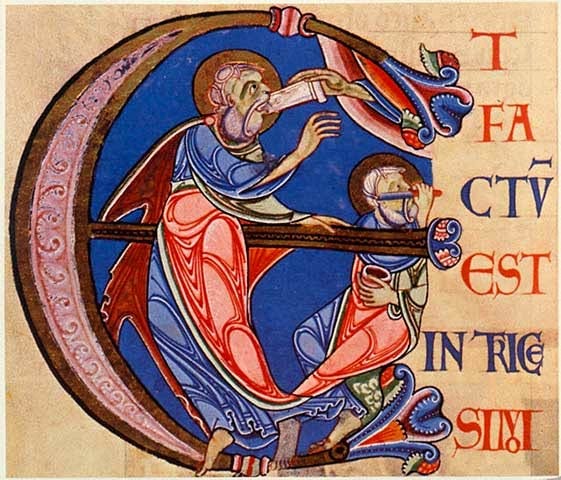
In the Book of Ezekiel of the Hebrew canon, the eponymous prophet is given visions from God, and sees a hand coming down from the heavens bearing a scroll (Eze 2:9). He is commanded to eat this scroll, and even me‘ēka tǝmalle’ מעיך תמלּא ‘to fill his belly’ with it (Eze 2:8-3:3). But what is interesting about this scroll is that the Book of Ezekiel describes: היא כתוּבה פּנים ואחור וכתוּב אליה קנים והגה והי ‘it had writing on the front and on the back, and there were written on it words of lamentation and mourning and woe’ (Eze 2:9).
My Hebrew teacher, Fr. Paul Tarazi, points to this verse frequently. Once one understands Tarazi’s thesis, one can start to understand why. The scroll is a work of ‘lamentation and mourning and woe’ for Ezekiel, and yet it tastes in his mouth ‘as sweet as honey’ (Eze 3:3). Yet it being written on front and back, on both sides of the scroll, attests to a fact that nothing else can be written on it. Ezekiel 2:9 indicates the closure of the canon. There is nothing else to be appended or emended. No human agent, least of all Ezekiel (who is a character in the scroll also!) is allowed to change what has been written, and because it ‘fills his belly’, Ezekiel, who has been made semiotically dependent on the scroll, is not permitted to speak anything else, apart from what is written on it!
As a work of literature, the Hebrew canon is utterly ruthless upon its human characters in this way. It is nothing else but lamentation and mourning and woe… when considered only from the perspective of those who receive it. It begins with God choosing a lineage of people from among the residents of the Syro-Arabian wilderness. He gives them a Law, a standard of behaviour, and then watches as they insistently, repeatedly, complain and refuse and break every single one of His Laws. And in the end, God acts by causing their neighbours to fall on them and scatter them into exile. And the text takes pains to note that it could have come to no other end.
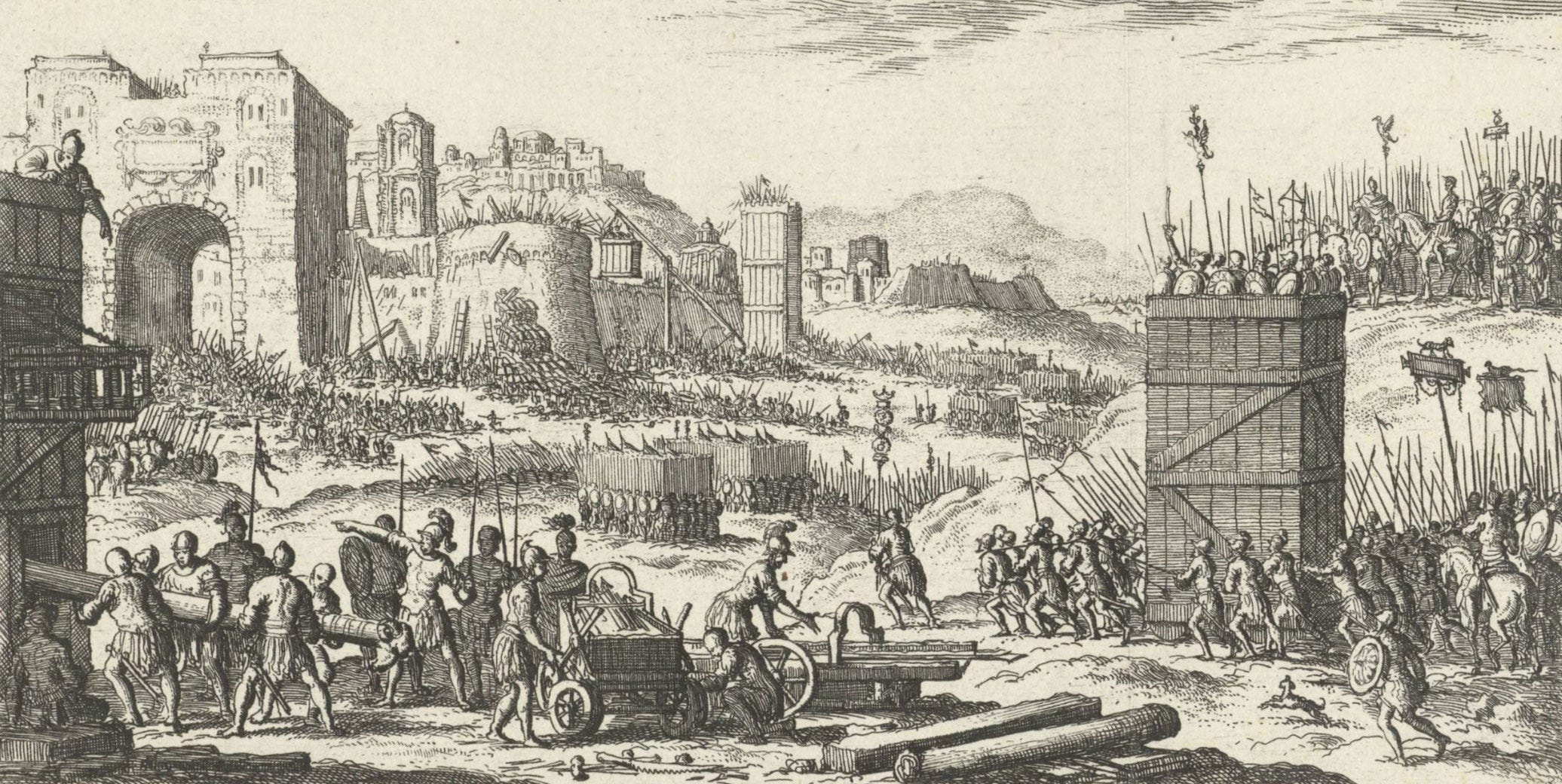
The Hebrew canon is hard to swallow. Indeed, apart from (the literary character of) Ezekiel, no one can swallow it. That is why, within a century of its completion, Hellenistic Jews were already devising interpretive strategies (historical, allegorical, philosophical) to make the text more palatable to audiences formed by Greek thought. Whatever the contemporary justification for these eisegetic strategies may have been, we are living in a world now shaped by the result: a horrific, twisted ethnonationalist ideology seeking to reconquer the land by force and kill off its inhabitants, justifying itself in prooftexts and motivated readings of the same text whose Law forbids exactly such shedding of innocent blood.
The true ‘sweetness’ that Ezekiel tasted is to be found only within that canon, only in its original ordering, and only in its consonantal unvoiced form. Dilution spoils it. Once you, the reader, accept that you are the problem – an impossible order to fill for any people, not only ‘the chosen’, not only followers of this ideology or that one – then the Hebrew canon becomes something truly light and liberating. You can try to follow the Law, to love God and to love your neighbour, and proclaim the Law in your words and deeds. You’ll fail. The judgement has already been written and delivered. But that’s fine. In the end, God will reward your work with its own completion, or He will punish your work with its undoing. In the meantime, don’t beat yourself up about it: because you are not God. And there is no God… but Him.
~~~
