

Ṭābiġa or Ararat?
The proper literary-geographic setting for the Beatitudes

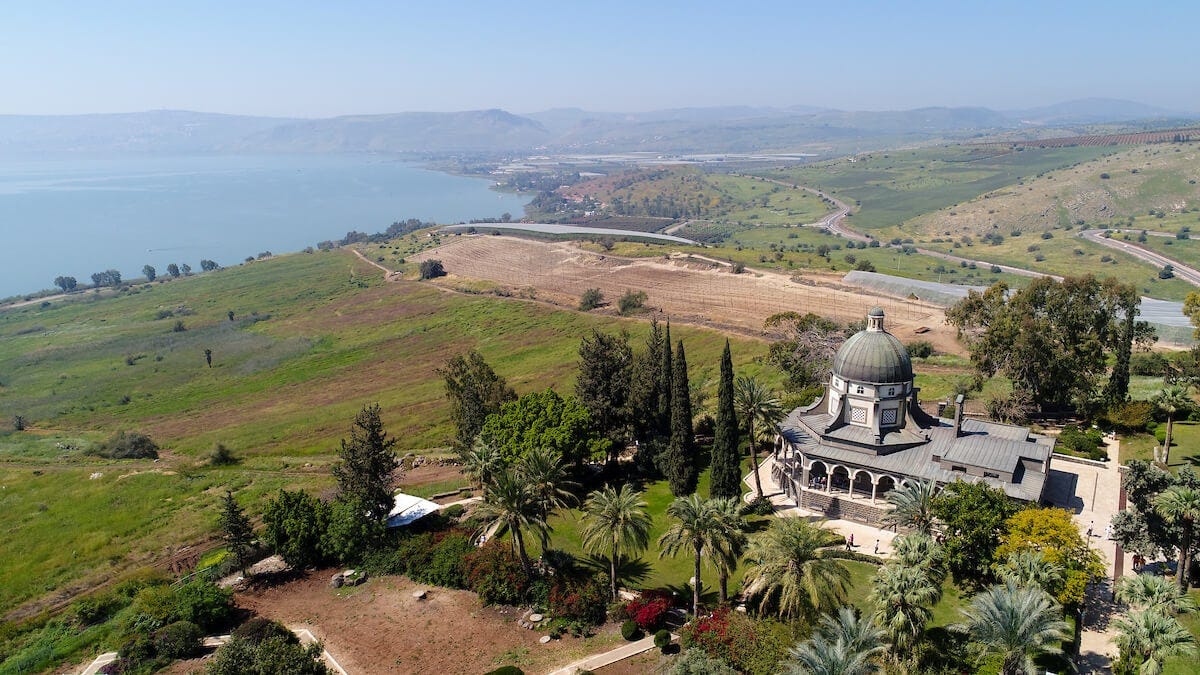
Prefacing the sermon in the fifth chapter of the Gospel of Matthew, we have this deceptively-brief description of the setting:
ἰδὼν δὲ τοὺς ὄχλους ἀνέβη εἰς τὸ ὄρος καὶ καθίσαντος αὐτοῦ προσῆλθαν αὐτῷ οἱ μαθηταὶ αὐτοῦ
Seeing the crowds, he went up on the mountain, and when he sat down his disciples came to him. (Matt 5:1)
By oral and historical tradition, the ὄρος on which Jesus delivered the Sermon on the Mount is the Mount of the Beatitudes just north of aṭ-Ṭābiġa in occupied Palestine. This is a natural site for Christian pilgrims to visit, and they have done so for over 1600 years, with the first written description of the site and its connexion with the Matthean text having been documented in the Itinerary of the Iberian-Roman female pilgrim Egeria. The Roman Catholic Church of the Beatitudes stands at this location today. Yet the Greek of the Gospel text points to a very different geographical landmark.
The key lies in the three words ὄχλος ‘crowd’, ὄρος ‘mountain’ and καθίζω ‘to sit, to be settled on, to be enthroned’. The usage of these three Greek lexemes together points, not to a local mountain in Palestine, but instead to Armenia: to Mount Ararat.
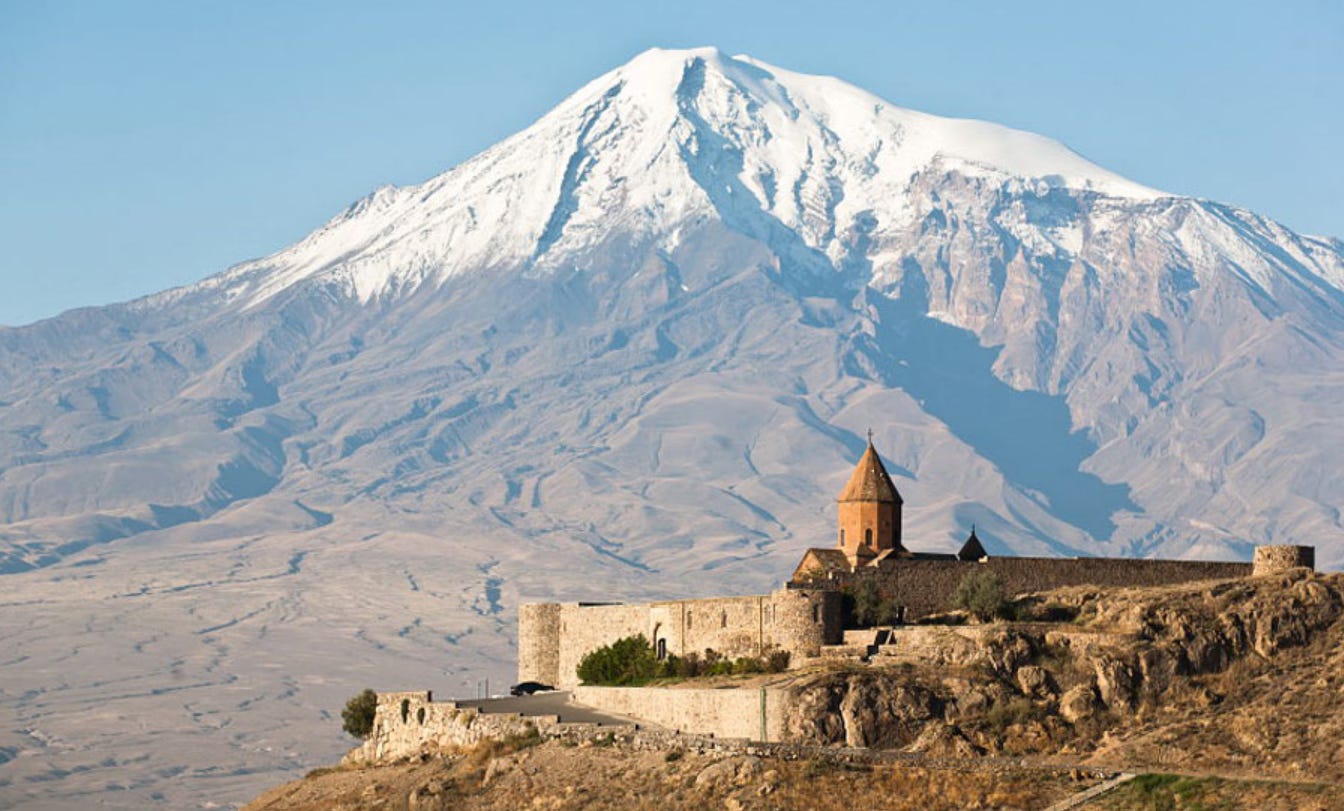
Just to clear things up: I am not saying that the historical Jesus of Nazareth literally ventured all the way to Armenia and sat down on the literal precipice of Mount Ararat to deliver His sermon, word for word, as it is found in the Matthean text. That would be stupid. What I am saying is that we must relocate our thinking, out of the ‘world’ of Biblical archaeologists, surveyors, excavators and antiquarians who deal in the provenances of artefacts and tag them to a grid on a map. And we must occupy the symbolic geography of a work of literature.
The way in which ‘crowd’, ‘mountain’ and ‘to sit’ point to Mount Ararat must be found in the Books of Genesis and Daniel in the Old Testament. The ὄχλος ‘crowd’ features strongly in the prophetic writings of Jeremiah and Ezekiel, and it serves a similar function in the non-prophetic Book of Daniel, in the predictions of Daniel before Darius the Mede.
וּבניו יתגּרוּ ואספוּ המון חילים רבּים וּבא בוא ושׁטף ועבר וישׁב ויתגּרה עד־מעזּו׃
καὶ οἱ υἱοὶ αὐτοῦ συνάξουσιν ὄχλον δυνάμεων πολλῶν καὶ ἐλεύσεται ἐρχόμενος καὶ κατακλύζων καὶ παρελεύσεται καὶ καθίεται καὶ συμπροσπλακήσεται ἕως τῆς ἰσχύος αὐτοῦ
‘His sons shall wage war and assemble a multitude of great forces, which shall come on and overflow and pass through, and again shall carry the war as far as his fortress.’ (Dan 11:10)
Note the use of the word κατακλύζω ‘to overflow, to deluge’, recognisable in the English loanword cataclysm. Although this word is not itself found in the chapters of Genesis dealing with the flood, it does point directly back to it nearly every time it is used: in Job 14, in Jeremiah 29, in Ezekiel 13, and most importantly for our purposes in 2 Peter 3. (I say ‘nearly’ because, when κατακλύζω is used in Psalm 77, ironically, it is directly linked to Moses striking the rock in the wilderness in Exodus 17 and Numbers 20.) The linkage between Daniel’s vision and the flood is reinforced by the occurrence of rab רב (Gk. πολύς ‘many’) in reference to men of violence, in both Daniel 11 and Genesis 6.
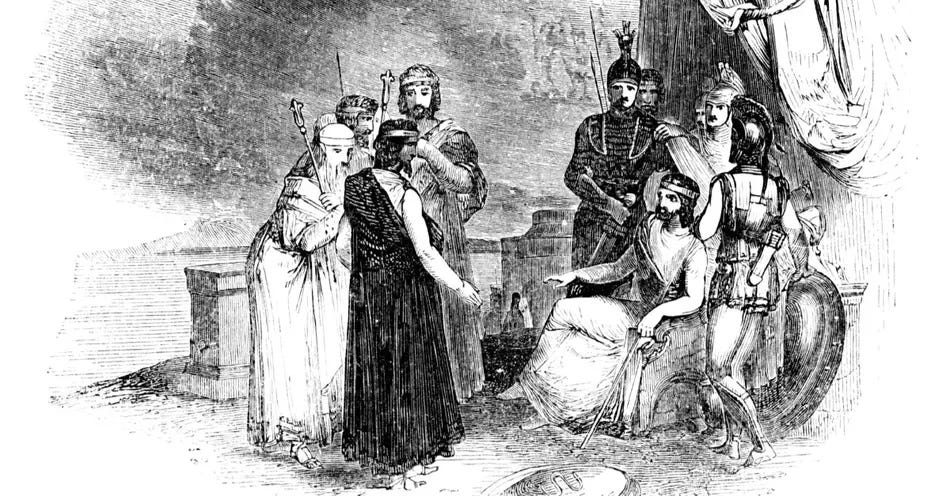
This ‘crowd’ is no king’s army. Instead it is a mixed multitude of people, including the sick and infirm and possessed and paralysed, from the entire surrounding countryside, from Galilee (to the north and west), from the Ten Cities (to the east), from Jerusalem and Judea (to the south) and from beyond the Jordan (to the east and south). Again we must sever ‘literal’ from ‘literary’ geography here, but such a ‘crowd’ – a mix of Syrians, Greeks and Judaeans drawn from every direction – frames Matthew’s use of ὄρος ‘mountain’ and καθίζω ‘to sit’. And the one other place besides the opening of Matthew 5 where these two Greek words occur together, is in Genesis 8:
ותּנח התּבה בּחדשׁ השּׁביעי בּשׁבעה־עשׂר יום לחדשׁ על הרי אררט׃
καὶ ἐκάθισεν ἡ κιβωτὸς ἐν μηνὶ τῷ ἑβδόμῳ ἑβδόμῃ καὶ εἰκάδι τοῦ μηνός ἐπὶ τὰ ὄρη τὰ Αραρατ
And in the seventh month, on the seventeenth day of the month, the ark came to rest upon the mountains of Ararat. (Gen 8:4)
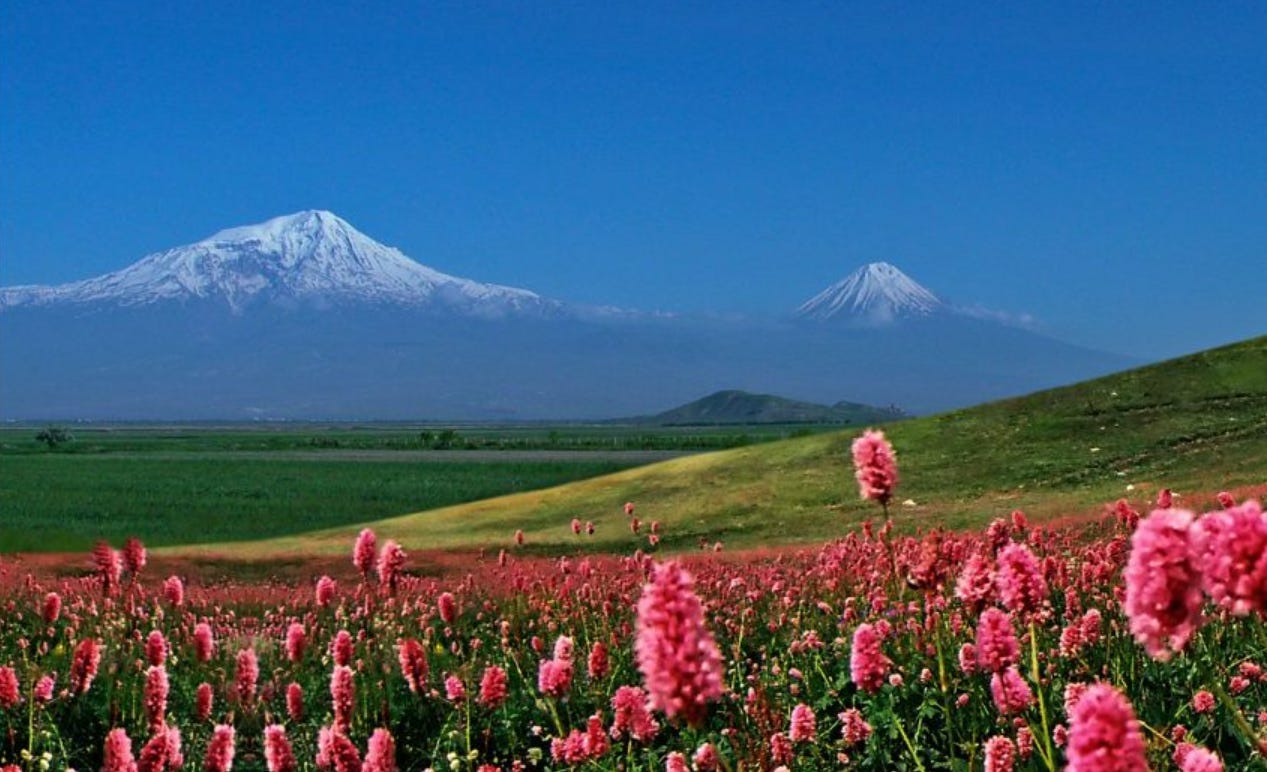
Genesis 6 and 7 are an undoing of the creation. God erases the distinctions between the heavens above and the waters below in order to consume the dry ground: literally the exact opposite process from Genesis 1. The result is to return the world to tohū wəbohū תהוּ ובהוּ ‘desolation and rubble’ as it was before the text began. In Genesis 8 God begins to relent and to allow the creation to reemerge from the flood, and eventually He reestablishes His pact with humanity through Noah and his children. By positioning itself at ‘Ararat’ Matthew 5:1 indicates to us that Jesus’s sermon which follows will serve as a literary restatement of God’s renewed covenant in Genesis 8.
Yet think about what this accomplishes, precisely from a literary standpoint. After all, Jeremiah 4:23 uses the same tohū wəbohū תהוּ ובהוּ as the text of Genesis 1… but it is in reference to a people who refuse to hear, and the results of their non-hearing of the command. He is pointing to the fact that in Genesis 6, the same conditions were made to prevail upon the earth, making it non-functional once again, that had prevailed in Genesis 1. And he is warning where the non-hearing of those who stand within earshot of his words are returning. The disobedience of the man is leading to his being made non-functional within an order wherein all other things hear God’s word and obey it.
The crowds which gather around Jesus at this new ‘Ararat’ are not the powerful who conquer with violence, not the greedy who come for plunder, not the human deluge which sweeps away kingdoms. They are instead those who are in some way ill, deformed, damaged, incomplete or vulnerable. Their various maladies and disabilities become a litany. They are, in various ways, tohū wəbohū תהוּ ובהוּ ‘desolation and waste’. This ὄχλος stands in for Noah and his sons as the human beings who hear God’s promise anew. Yet they are also witnesses to the fact of the failure of the kingdoms which have come before them, to hear and obey His word. The same conditions which prevailed upon the earth in Genesis 6, still prevail upon the earth for those who hear Jesus’s sermon.

And make no mistake: those same conditions prevail today as well. Even in the historical, geographical Ararat, the ‘wickedness of man’ is still ‘great in the earth’. In Armenia, an election was just held. The prime minister who just ‘won’[1] (supposedly[2]) yet another term in office, is also one whose motorcade ran over and killed a pregnant woman, Sona Mnatsakanyan, and her unborn child[3]. Only one driver was held responsible for her death, with a court ruling and sentence that amounted to little more than a slap on the wrist. The appeasement of the global plutocrats and the chess games of great-power geopolitics, still take place atop the bones of the innocent, the powerless, and those who are simply ‘in the way’. Even in the land where Noah and his children ‘historically’ received the command of God for a new covenant, in which God’s forbearance and kindness were extended to all of creation in the promise never again to uncreate what He had created, we still make children of ire of ourselves, while calling ourselves children of His Name.
The setting of Matthew 5:1 places before us a necessary literary ‘ground’ for the Sermon on the Mount. The words given by Jesus from the summit of this literary echo of Ararat, are not a summary of Jesus’s ‘moral teachings’. They are not a collection of airy-fairy ideals and ‘wouldn’t it be nice if’-statements. They are not a document of ethical exhortation, meant to be examined and argued with. They are not meant to be split down the middle into unattainable absolutes and specific pastoral counsels. They are not a vision of a model of future behaviour spoken for a people who do not yet exist. They are not a highfalutin string of impossible moral pronouncements which must be adapted to a ‘real world’ where pregnant women can get run over by prime-ministerial motorcades. The words of the Sermon on the Mount are, bluntly put, the same command which God gave to the human being from the beginning.
As we approach the Sermon on the Mount in its completion, then, we need to be reminded that it is not an exercise in utopian ‘world-building’. It is rather a reaffirmation of God’s καιρός-‘time’, which intrudes upon and shatters the mere χρόνος-‘time’ of seasonal cycles which the powers and lords of the earth imagine they can predict and control. The Sermon on the Mount is the repeat delivery to God’s ὄχλος, the mixed-multitude of Noah’s children, of the Law that had been in their keeping and in their hearing from the beginning.
[1] Lucy Papachristou, ‘Armenia’s Pashinyan wins election, observers allege Russian interference’, Reuters (7 June 2026). https://www.reuters.com/world/armenias-ruling-party-leads-parliamentary-vote-with-57-early-results-2026-06-07/.
[2] Staff, ‘Armenia opposition parties reject June 7 election results, cite irregularities and voter pressure, demand recounts’, The Armenian Report (10 June 2026). https://www.thearmenianreport.com/post/armenia-opposition-parties-reject-june-7-election-results-cite-irregularities-and-voter-pressure-d.
[3] Arshaluys Barseghyan, ‘Pashinyan’s motorcade leader sentenced to 1.5 years in prison after 2022 fatal accident’, OC Media (19 August 2025). https://oc-media.org/pashinyans-motorcade-leader-sentenced-to-1-5-years-in-prison-after-2022-fatal-accident/.
 | A guest post by
|