



In vernacular Levantine Arabic, a badla بدلة is a tailored suit: something that is altered to fit you[i]. And in Farsī, the term badalī بدلى connotes an ‘imitation, fake’, like costume jewellery. Both words derive from the Semitic root bā’-dāl-lām ب د ل which, in Arabic, works as ‘to change, to alter’. Similarly, in Mandarin, a biézì 別字 is either a ‘typo’ or a ‘variant’ form of a character; and in Shanghai dialect, the word beh 別 is a verb: ‘to turn, to change’, as in 把頭別轉來 ‘turn your head (toward me)’.
What’s truly interesting is that these two roots are phonetically similar going back into distant antiquity. Thus, like tiān 天 (OC /*qʰl’iː[n]/ in the Zhengzhang reconstruction) ‘heaven, God’ with ‘ayn-lām-yā ع ل ي ‘high, exalted’; lǜ 綠 (OC /*roɡ/) ‘green’ with wāw-rā’-qāf و ر ق ‘leaves, greenery’; jí 及 (OC /*ɡrɯb/) ‘to reach’ and nūn-jīm-‘ayn ن ج ع ‘to hold onto, to stay’; and cháng 嘗 (OC /*djaŋ/) ‘to taste, decree’ and ṭā’-‘ayn-mīm ط ع م ‘to taste, to decree’ – there is a good argument to be made that these two lexemes bié 別 (OC /*bred/) ‘to distinguish, to separate, to divide’ and bā’-dāl-lām ب د ل ‘to separate, to distinguish, to set apart’ share a common derivation in distant antiquity.
Bié 別 is a syssemantograph (huìyì 會意) made up of a dāo 刀 ‘knife’ cutting between gǔ 骨 ‘bones’, thus ‘separating’ them. This character was originally written with four strokes, graphically as well as phonetically linked to the cognate bā 八 ‘eight, many, numerous, to divide’ (OC /*preːd/). Notice that the appearance of bā is a long object split into two pieces! On the other hand, Schuessler and Matisoff both link this word to liè 列 ‘line, row, to split’ and offer the Myanma prat ပြတ် ‘to snap, to break, to come up short’ as a cognate[ii].

In modern Mandarin, the word bié 別 is used by itself as a phonetic contraction or portmanteau (héyīncí 合音詞) of bùyào 不要 ‘don’t’; but this is a late innovation which shows up only in Late Imperial era (1368-1911) vernacular. It’s also used in compounds like: biérén 別人 ‘others, other people’; tèbié 特別 ‘especially’; fēnbié 分別 ‘to distinguish’; biéde 別的 ‘other, elsewise’; qūbié 區別 ‘difference’; biéshù 別墅 ‘villa, freestanding house’; gēbié 個別 ‘individual’; jíbié 級別 ‘grade, level, rank’; chábié 差別 ‘variance, difference’; gàobié 告別 ‘to (take one’s) leave, to bid farewell’; shíbié 識別 ‘to discern, to distinguish’; and xìngbié 性別 ‘gender’. It’s also used in the idiom biéwú xuǎnzé 別無選擇 ‘to have no other options, to have no choice’. These compound usages all reflect the older function of bié as ‘to separate’ or ‘to distinguish’.
In the Classics, we see bié 別 used in the Documents and the Rites, and also in the Gongyang Commentary on the Spring and Autumn. In the Documents, bié is used geographically: 岷山導江,東別為沱。 ‘From Mount Mín he traced the Jiāng [Yangtze], which, branching off to the east, formed the Tuó’ (Book of Documents 《尚書》, Book of Xià 夏書, ‘Tribute of Yǔ’ 禹貢 19) In the same work it is used as a toponym, Dàbié 大別, literally, the ‘Great Divide’: though in China, this hydrological split is between the Huái 淮 and the Jiāng 江 river systems, along the range of mountains between Hénán, Húběi and Ãnhuī Provinces.
It is absolutely essential that one discard any anachronism of bié 別 as ‘don’t’, since such a reading will yield an opposite semantic thrust to the one the author intends in cases like this: 別求聞由古先哲王用康保民。 ‘(Further still), you must search out besides what is to be learned of the wise kings of antiquity, and employ it in tranquillising and protecting the people.’ (Documents, Book of Zhou 周書, ‘Announcement to the Prince of Kang’ 康誥 3) Here, far from ‘don’t’, what is conveyed is rather more like ‘take special care to do this’. Also in the Documents we can see its use as ‘other’: 乃別播敷 ‘when they propagate other lessons’ (Ibid. 10) and as ‘to distinguish’: 往哉!旌別淑慝。 ‘Go! Signalise the good, separating the bad from them.’ (Documents, Book of Zhou, ‘Charge to the Duke of Bi’ 畢命 3) In each of these cases, the function is ‘to discern’ the proper teaching from the evil ones, or honest functionaries from wicked ones.
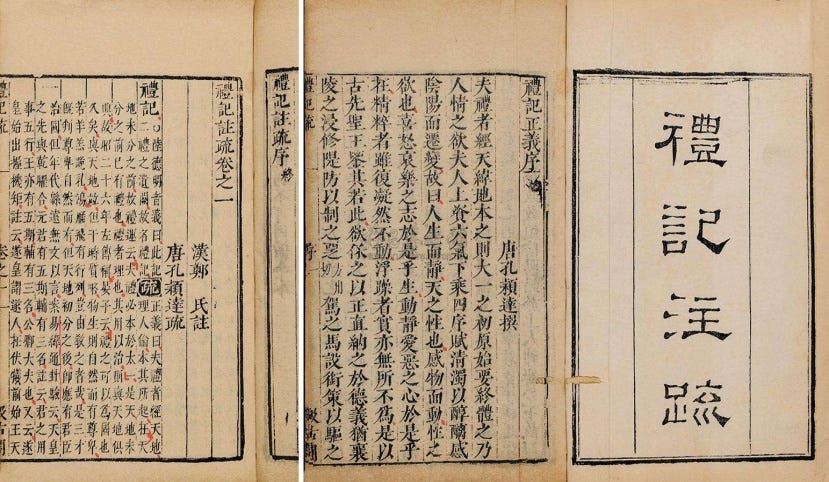
The word bié 別 is of a truly high importance for the Book of Rites. We see it prominently in the very first chapter of this Classic:
夫禮者所以定親疏,決嫌疑,別同異,明是非也。
They are the rules of propriety, that furnish the means of determining (the observances towards) relatives, as near and remote; of settling points which may cause suspicion or doubt; of distinguishing where there should be agreement, and where difference; and of making clear what is right and what is wrong. (Book of Rites 《禮記》 1.6)
Indeed, the Rites are given to human beings precisely for ‘discernment’, for ‘separating’ what is proper from what is improper. The Rites draw such ‘distinctions’ between human and other animals (1.9) – not because humans are better than animals (see the Ode ‘Look at a Rat’!) but because human beings need ritual in place of other strategies for survival. The Rites also draw ‘distinctions’ between duties for men and women (1.40), between different family lines (3.114), and between the dead and the living (4.140). The capacity of human princes and rulers for ‘discernment’, for ‘distinguishing’ right from wrong, is key both to justice at law (5.47) and more routine government functions (5.79).
It is in precisely this ritual function that badal בדל is used in the books of the Hebrew Law. וּלהבדּיל בּין הקּדשׁ וּבין החל וּבין הטּמא וּבין הטּהור ‘You are to distinguish between the holy and the common, between the unclean and the clean.’ (Lev 10:10) Notice the connexion here between badal and qodeš קדש ‘holy, consecrated, set apart’. The Hebrew people are described as qodeš, having been set apart by God as His own: והייתם לי קדשׁים כּי קדושׁ אני יהוה ואבדּל אתכם מן־העמּים להיות לי ‘You shall be holy to me; for I the Lord am holy, and have separated you from the peoples, that you should be mine.’ (Lev 20:26) But pay very careful attention to how it works. Among the Hebrews themselves, there is also an example of a people set apart for a specific purpose. והבדּלתּ את־הלויּם מתּוך בּני ישׂראל והיוּ לי הלויּם ‘Thus you shall separate the Levites from among the people of Israel, and the Levites shall be mine.’ (Num 8:14)
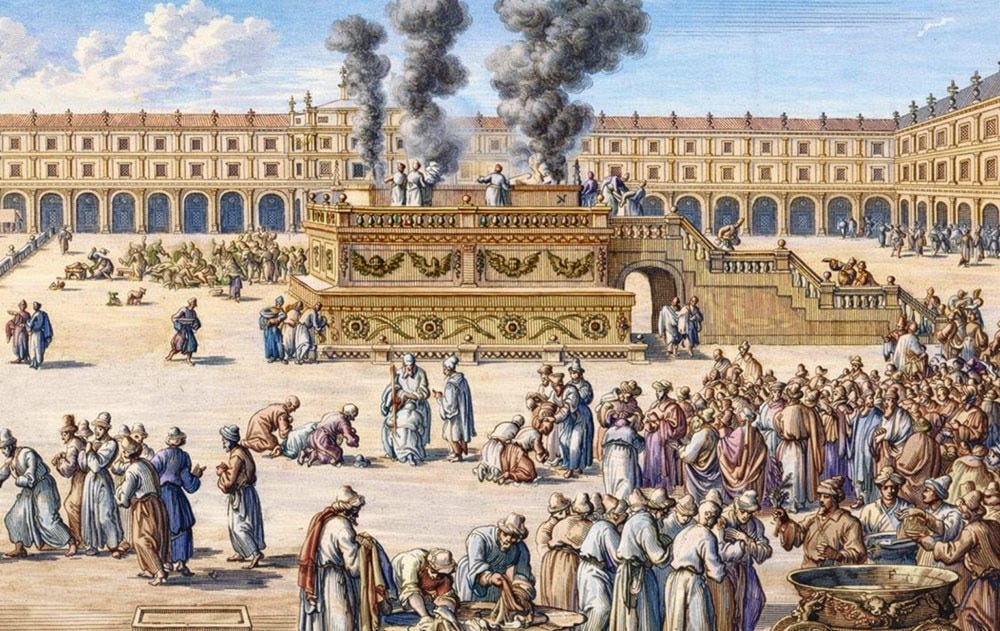
Why, though? Levi isn’t even a well-behaved brother. He’s a murderer (Genesis 34:25-26) who is jealous of Joseph and conspires to kill him (Gen 37:20), and who is cursed by his father for his rage (Gen 49:5-7). Still, God makes use of Levi’s progeny as His priestly class. The Levites don’t get rights in the land, precisely on account of their chosenness among the Hebrews as God’s priests (Deut 10:9). But when they let this status get to their heads, God must consistently smack them down. God smites Miriam with leprosy (Num 12:10) when Aaron and she question Moses’s choice of wife. Later, the Levite Qoraḥ raises a rebellion against Moses among the Levites and Reubenites because they think they are qualified to serve as God’s priests (Num 16:1-3). After they dare to lay hands on the censers, God makes the earth to swallow the rebels up whole (Num 16:31-33).
Note how the Torah takes such pains to remind us that a status of qodeš קדש is not given as a reward for better behaviour (Joseph is morally superior to Levi), nor greater wealth (the Levites have no land base), nor superior strength (Judah is the strong one, not Levi), nor superior ability (Moses has a speech impediment). The text of the Torah undercuts, with brutal emphasis, every single Hellenistic expectation that Platonic-Aristotelian virtue is a requisite for holiness.
Thus, the bǝdalīm בדלים ‘divisions’ which God establishes are shown not to be hierarchies. Just as in the Odes of the Chinese canon human beings are not superior to (faithful, caring) doves or (clever, filial) rats, but are still expected in the Rites to keep themselves bié 別 ‘separate’ in behaviour from the qínshòu 禽獸 ‘birds and beasts’, so too when God institutes bǝdalīm in Genesis 1 among His creations and then in Leviticus and Numbers among the people, it is not to assign to them differences in intrinsic worth. It is to provide them with distinct functional roles[iii].

This is even clearer in the Arabic, wherein the root bā’-dāl-lām ب د ل functions as ‘to (ex)change, to alter, to switch (one thing for its equivalent)’. In the Qur’ān, even hardship and ease are interchangeable!
ثمّ بدّلنا مكان السّيّئة الحسنة حتّى عفوا وّقالوا قد مسّ ءابآءنا الضّرّآء والسّرّآو فأخذنهم بغتة وهم لا يشعرون
Then We exchanged in place of the bad [condition], good, until they increased [and prospered] and said, ‘Our fathers [also] were touched with hardship and ease.’ So We seized them suddenly while they did not perceive. (Q 7:95)
Here God is explaining how prophecy works, throughout the Abrahamic scrolls! When a prophet appears in a city where the people are going through hard times, they will listen to him, and they will begin to examine themselves. But when a prophet appears in a city where the people are wealthy and complacent, they will not listen to him but will instead trust in fortune (or ‘meritocracy’, or the law of attraction, or the power of positive thinking: it’s all the same bilge). But the wealth is sent as a test – when you reach out to take the good things that God offers you, do you lie to yourself and say that you earned it? Or do you render to Him thanks, and take them with His instruction?
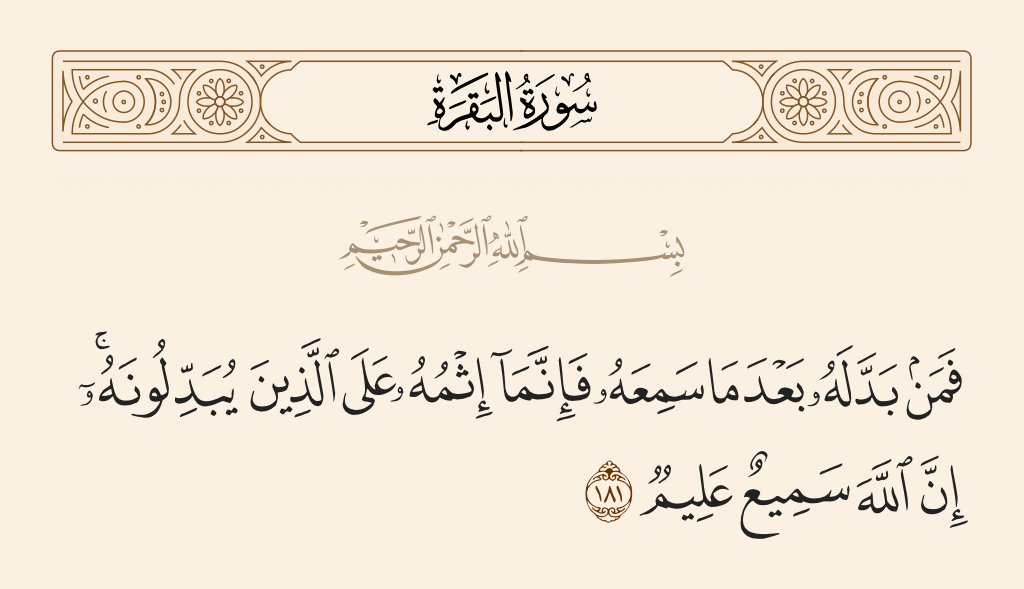
Note that it is only God Who is allowed to ‘exchange’ this way, both because to Him, as He needs nothing, the cases of hardship and ease are truly equivalent (as who among us biological organisms would actively choose hardship over ease, apart from expectation of ease down the road?), and because He accordingly has no intent to change His instruction: فمن بدّله بعدما سمعه فانّمآ إثمه على الّذين يبدّلونه إنّ الله سميع عليم ‘Then whoever alters the bequest after he has heard it – the sin is only upon those who have altered it. Indeed, God is Hearing and Knowing.’ (Q 2:181) But people will knowingly alter what has been written in order to suit their own agendas. This was the case with the alterations to the Hebrew canon in the reordering of the books, the introduction of the second canon and the imposition of vowel marks onto the text. And this was the case with the New Testament, as Christians in power exchanged textual analysis for Christological and philosophical debate.
Aluoben would be aware of this. When he uses the phrase wúbié 吾別, it’s unlikely that he is using it adverbially (as Saeki interprets it: ‘we have each…’). Rather, he is saying ‘we exchange, we alter’, or (more ominously) ‘we depart from’. The wú ‘we, us’ is named for emphasis. The bié is used as a verb. Either way, what he’s saying is actually quite dire: each of us takes God and exchanges Him, or forsakes Him, for things of infinitely lesser value. All of us are Judas: we all trade God for our thirty pieces of silver. And we do so because we’re incapable of giving thanks in hardship.
Just look at the ‘grindset’ and gym-bro influencers of the sort who like to say that ‘weak men make hard times’[iv]. What are they saying? They look at the ‘hard times’ as a stage in a cyclical history driven by human action. The ‘grindset’ is thus not merely an exhortation to hard work: if it were, there would be no need to make ‘content’ about it. It’s an attitude of worship of the self, embracing hardship as a building project so the ‘good times’ will return. They are the same as those among the Corinthians criticised by Paul in his second letter to them, who put their ‘trust in [them]selves’ (2 Cor 1:9). When Paul speaks of his πάθημα ‘suffering’ and of his θλῖψις ‘affliction’ (2 Cor 1:7-8), it is not so that the Corinthians might have ἄνεσις ‘ease’, but rather that they might have ἐπίγνωσις ‘understanding’ (2 Cor 1:13-14) that it is God Who takes action (1:10)… and for God, ‘affliction’ and ‘ease’ are of equal value.
Aluoben, following Paul his master, has, as the kids say these days, zero chill here. He Whom Heaven exalts is duō cháng zài 多常在 ‘present at all times’. And yet we ‘alter’ teachings and ‘depart from’ Him. Why? Because we prefer our own villages, habits, speech and customs: the things that give us ease. And the embrace of hardship for the sake of these things, is not the same as embracing Him.

[i] From a conversation at Qahwah House in Minneapolis with Paul Nadim Tarazi and Marc Philip Boulos, 31 October 2026.
[ii] Schuessler (2007), 167.
Matisoff et al. (2015), 471.
[iii] The other use of the root bet-dalet-lamed ב־ד־ל in the Hebrew books is as bǝdolā בדלה ‘bdellium’, which is a kind of fragrant gum resin produced by the gugal tree. It seems it’s so called because it appears ‘in pieces’. This resin is only mentioned once in Genesis as a valuable product of Hawīlā (Gen 2:12), but Numbers also uses the image of it to speak of the consistency of the man מן ‘what’ with which God fed the Hebrews in the desert (Num 11:7).
[iv] Chris Reads, ‘Before the fall’, Medium (17 June 2022). https://chrisreads.medium.com/before-the-fall-ce989924a9c8.